
Cuba on the Edge: Short Stories from the Island
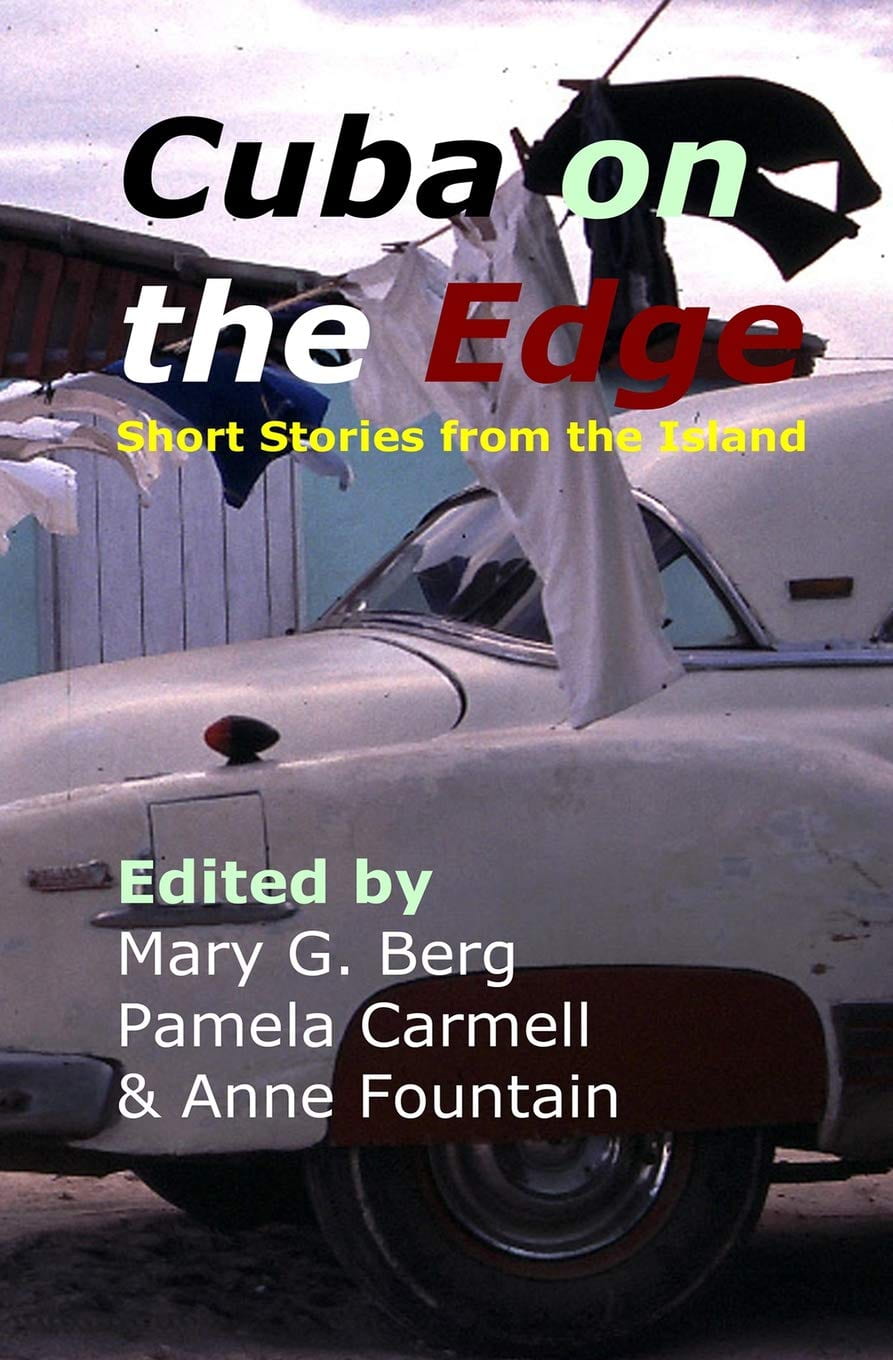
Cuba on the Edge: Short Stories from the Island Edited by Mary G. Berg, Pamela Carmell and Anne Fountain. Nottingham, UK: Critical, Cultural and Communications Press, 2007. 238 pages.
If you want to read contemporary Cuban fiction and do not have access to the Spanish original, an increasing number of excellent translations will now allow you to become acquainted with the island’s most outstanding writers. Poised as midwives between writer and reader, academy-based translators facilitate the journey of Cuban narratives from insularity to globalization.
For instance, you can easily find translations of the work of Nancy Morejón, published by Wayne State University Press, or of Jesús Díaz, published by Duke University Press. Unlike major university presses that specialize in one author, smaller publishing houses such as the Critical, Cultural and Communications Press introduce the English-speaking reader to a range of authors. These Cuban writers come from various generations and reach out to a transnational audience in order to transcend the U.S.’s cultural embargo of Cuban culture.
In Cuba on the Edge, Mary G. Berg, Pamela Carmell and Anne Fountain make available the short fiction of Cuba’s best writers, allowing other members of the academy to expand the literary canon.
Cuba on the Edge collects the stories of 21 Cuban writers, providing the reader with one to three narratives from each author, thus better to define each particular writer’s voice. In addition to the 31 stories, the anthology includes a preface with a thematic presentation of the fiction, and notes on the writers and translators included in this volume.
The editors state that the title of the collection “refers both to Cubans’ awareness of living on the brink of a new future, and their edginess as they negotiate their way through current uncertainties.” The title perhaps also evokes being on the edge of literary recognition. Those “uncertainties” translate into a lack of recognition based on the lack of publishing venues on the island and/or the difficulty of being published abroad. In a highly ironic short story entitled “Unplugged,” Eduardo del Llano tells of writers living in Havana who falsely announce that they have “left the country” and published in Paris, in order to gain recognition within. Moreover, the practice of shutting oneself in, of disappearing, so as to become known, reproduces the gesture of “a character of Mark Twain’s who faked his own death, anticipating that he would be revered as a writer.” As with “Unplugged,” one of the most prominent literary devices used in many of the stories in Cuba on the Edge is that of intertextuality, as if the gesture of allusion to a known author should facilitate moving from a place of silence to one of voice. Through intertextuality, writers such as Antonio José Ponte (via Borges’ ruined cities), Raúl Aguiar (via Cortázar’s “Continuity of Parks”), Leonardo Padura Fuentes (via Calderón’s Life Is a Dream), Marilyn Bobes (via Storni’s preoccupation with suicide), María Elena Llana (via García Márquez manipulation of historical and mythical time), Ronaldo Menéndez Plasencia (via Rulfo’s depiction of the hatred between fathers and sons), and Jesús David Curbelo (via Donoso’s eroticism) navigate in and out the minefield of Cuban letters by conflating present and past times, and imaginary and real spaces in their fiction. By contextualizing their stories with the writing of their great Spanish and Latin American predecessors, these Cuban writers anchor themselves firmly in the postmodern imagination.
In some stories, the perspective of a country bumpkin or a child divulges unspoken truths. Adelaida Fernández de Juan, Miguel Mejides, Ana Lydia Vega Serova and Senel Paz expose the great scarcity during the 1990s Special Period, corruption in Cuba’s bureaucracy, and parental neglect, respectively. Moreover, the writers in this collection manipulate the nuances of understated irony and humor to consider how the arts hold an essential place in Cuban culture, particularly in times of extreme social need (as in Karla Suárez “Joni Mitchell was Singing Blue” and Ena Lucía Portela’s “A Nude in the Rain”).
This collection includes outstanding ironic stories that confront a variety of subjects. Nancy Alonso and Francisco García González deal with gender role; Alejandro Aguilar describes extreme hunger; Alexis García Somodevilla exposes the futility of a professional education when jobs for Cuba’s youth are nonexistent, and José Antonio Quintana Vega pokes fun at the empty nomenclature of idealized revolutionary roles. Finally, Mirta Yáñez utilizes popular language to get at the endemic erosion of women’s integrity when they are forced to provide for their families through “jineterismo” (the Cuban word for prostitution), and Aida Bahr mines the multiple point of view to describe the persistence of traditional feminine roles in spite of more than forty years of supposed social transformation.
Overall, the translators have rendered these complex narratives with impeccable linguistic acumen and respect for the original. Pamela Carmell renders Mirta Yáñez’s popular narrator well, falling short of the mark only at the very beginning of the story, given the difficulty of translating several popular sayings.
By editing and translating these writers, Mary G. Berg, Pamela Carmell and Anne Fountain have helped the best of Cuban contemporary authors “negotiate their way through uncertainties” to deserved recognition.
Winter 2008, Volume VII, Number 2
Flora González Mandri teaches at Emerson College in Boston and has published Guarding Cultural Memory: Afro-Cuban Women in Literature and the Arts (2006).
Related Articles

A Review of Bodies Found in Various Places
This bilingual anthology of Elvira Hernández, translated by Daniel Borzutzky and Alec Schumacher and published by Cardboard House Press, offers a comprehensive entry point into the work of the Chilean poet. The translators’ preface offers a valuable introduction that provides important context to her work and explains aspects of her poetry present in the volume, such as Hernández’s self-effacing “ethics of invisibility,” an ars poetica in which the poems stand in front while the poet hangs back, in a call to observe rather than to be observed. In this sense, Hernández has long written from the edges of Chile’s public life, partly by choice, partly by necessity: her birth name is Rosa María Teresa Adriasola Olave, but she adopted the pseudonym of Elvira Hernández under the Pinochet dictatorship.

A Review of An Ordinary Landscape of Violence
When first reading the title, An Ordinary Landscape of Violence, I asked myself if there is really anything “ordinary” about a landscape of violence? Preity R. Kumar argues that violence is endemic to Guyana’s colonial history and is something that women loving women (WLW) contend with and resist in their personal and public lives.

A Review of Lula: A People’s President and the Fight for Brazil’s Future
André Pagliarini’s new book arrives at a timely moment. During the summer of 2025, when the book was released, the United States began engaging in deeper debates about Brazil’s political situation. This shift was tied to the U.S. government’s decision to impose 50% tariffs on Brazilian products—the highest level ever applied to another country, matched only by India. In a letter to President Lula, Donald Trump’s administration justified the measure by citing a trade deficit with Brazil. It also criticized the South American nation for prosecuting one of Washington’s ideological allies, former president Jair Bolsonaro, on charges of attempting a coup d’état. Sentenced by Brazil’s Supreme Court to just over 27 years in prison, the right-wing leader had lost his 2022 reelection bid to a well-known leftist figure, Lula da Silva, and now stands, for many, as a global example of how a democracy can respond to those who attack it and attempt to cling to power through force.

