

About the Author
José Antonio Murillo studies Economics and Computer Science at Harvard College, ’22. He grew-up in Mexico City, where he dedicated most of his extra-curricular time to competitive debating. The link to his TEDx Talk can be found at https://www.youtube.com/watch?v=HycnNMeUdbE
“Porque yo lo digo”
Twenty years ago, Mario Vargas Llosa called Mexico “the perfect dictatorship.” Today, Mexico is no longer ruled by a one-party regime, but it is still is far from being the epitome of Ancient Greek Democracy. The “anti-debating” culture is entrenched in Mexico’s roots. Mexicans are victims of a society that discourages public discourse and argumentation. Bosses, parents and teachers will continuously remind you that they are right, that they are holders of the universal truth, just because they say so. That is one of Mexico’s principle problems: the lack of debate culture “porqué yo lo digo.”
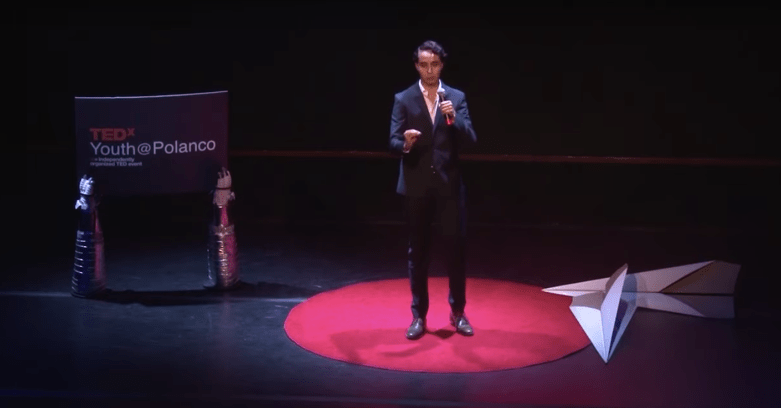
Alarmed by the restrictive nature of my country’s culture, I decided to deliver a TEDx Talk in May 2018. I discussed what has led Mexico to have such cultural norms and their consequences. Now, studying at Harvard, I want to share my understanding and knowledge about this problem with my peers, faculty members, and Revista‘s Student Views avid readers. This article highlights the key points and conclusions that I addressed on my TEDx Talk.
It is easy to see expressions of the “anti-debating” culture in most aspects of Mexicans’ daily lives. Employees are discouraged from questioning higher-ups; euphemisms and diminutives are core elements of the Mexican dialect, reflecting an effort to avoid confrontation; it is well known that people ought to never discuss politics or religion in the dining table. Those who break the social rules or expectations become the “irrespetuosos, preguntones y arma pleitos.” We, the Mexicans, are like jarritos de tonalá: we get offended with the slightest critics.
Mexico’s restrictive culture is the result of a merge of harmful institutional, educational and tradition-based influences. In schools, memorization is rewarded over analysis and research. Media outlets do not help. According to Pedro Majluf from the Centro Espinosa Yglesias, less than two percent of daily programming on open television is dedicated to discussion programs and never during primetime. At the same time, violent forces repress public opinion—from the state, which censors, to organized crime, which spreads silence with its firearms. It is no surprise that Morocco and Jordan – countries that are ruled by monarchs – are better positioned than Mexico in the Press Freedom Index.

Mexico’s 2018 presidential election perfectly exemplified this culture. Throughout the campaign and presidential debates, the candidates’ speeches were filled with false analogies, meaningless promises, and lacking logic. According to Veraz, in the second presidential debate, fake or partially fake claims were said every 10 minutes. In an attempt to turn the debate into a mediatic circus, one of the candidates even suggested cutting off thieves’ hands. You could argue that these are isolated incidents, but they are clearly not. In the past, candidates have threatened to punch each other, party officials have insulted their opponents with racial slurs, and congressmen have battled with fists, instead of arguments.
The consequences of this culture are strong and powerful: they affect how Mexicans relate to each other, the ventures that we pursue and the democracy that defines our nation. Without fruitful political debates, it is impossible to determine the path that the government should continue to serve the interests of the Mexican people better. We need to argue to change our realities and imagine the kind of future that we want. It is only the free marketplace of ideas that can take us to a society in which policies are shaped in a way that can benefit us the most. Similarly, only dialogue can make us tolerant; by discussing issues that we consider taboos, we can open ourselves to others’ lifestyles and ideas. Through debate, society can move forward.
Finding ways to promote discourse and dialogue in the Mexican society will not easy, but it is possible. The Ministry of Education could fund educational programs that foster debate and argumentation in public high schools. Political debates could be organized in non-election periods by civil society organizations. Media outlets could dedicate more screen time to programs that foster values in favor of criticism and argumentation. While nations like England and France have exercised the art of debate for more than three centuries, in Mexico, we had the first presidential debate in 1994. We are a long way from having a culture that actively embraces criticism, but with hard work and effort, Mexico can significantly change its attitude towards many of these values.
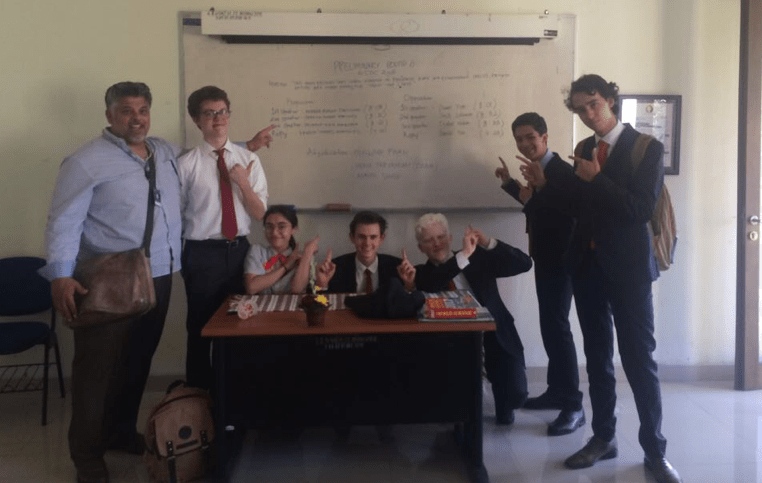
In high school, I was highly involved in competitive debating, and I even led Mexico’s National Debate Team to the Debate World Championships. This experience was truly transformative—it introduced me to a space, where I learned a lot about the issues that are critical in today’s world and how to discuss them. I was very fortunate to have this opportunity. However, I recognize that it was an experience that is only available to a selected few: students who live in the country’s capital and attend hand-picked, private schools. I wish that this was not the case. I wish that debating was part of my country’s core culture – a daily exercise, performed without judgement or criticism, by Mexicans in their homes, workspaces, and social environments. I wish not to hear someone claiming “porque yo lo digo” ever again.
More Student Views

Puerto Rico’s Act 60: More Than Economics, a Human Rights Issue
For my senior research analysis project, I chose to examine Puerto Rico’s Act 60 policy. To gain a personal perspective on its impact, I interviewed Nyia Chusan, a Puerto Rican graduate student at Virginia Commonwealth University, who shared her experiences of how gentrification has changed her island:

Beyond Presence: Building Kichwa Community at Harvard
I recently had the pleasure of reuniting with Américo Mendoza-Mori, current assistant professor at St Olaf’s College, at my current institution and alma mater, the University of Wisconsin-Madison. Professor Mendoza-Mori, who was invited to Madison by the university’s Latin American, Caribbean, and Iberian Studies Program, shared how Indigenous languages and knowledges can reshape the ways universities teach, research and engage with communities, both local and abroad.

Of Salamanders and Spirits
I probably could’ve chosen a better day to visit the CIIDIR-IPN for the first time. It was the last week of September and the city had come to a full stop. Citizens barricaded the streets with tarps and plastic chairs, and protest banners covered the walls of the Edificio de Gobierno del Estado de Oaxaca, all demanding fair wages for the state’s educators. It was my first (but certainly not my last) encounter with the fierce political activism that Oaxaca is known for.

